The shoe upper manufacturing process converts flat leather, synthetic materials, textiles and reinforcement components into a shaped and assembled upper ready for later footwear production. Depending on the shoe construction, the workflow can include cutting, skiving, adhesive application, edge folding, sewing, punching or eyeleting, and three-dimensional moulding.
These operations are closely connected. Poor cutting affects sewing alignment, excessive edge thickness can make folding difficult, inconsistent gluing can reduce edge quality, and inaccurate sewing can affect the shape of the finished upper. For this reason, footwear factories should evaluate the upper-production line as a complete process rather than selecting each machine in isolation.
For broader technical reference, SATRA publishes a Basic Shoemaking technical series covering important footwear-production stages from pattern cutting onward. The exact sequence used in a factory still depends on the shoe construction, materials and production method.
Shoe Upper Production Process at a Glance
Not every shoe uses every operation below, but this sequence shows how the major upper-preparation processes typically relate to one another.
1. Material and Pattern Preparation
Upper production begins before the first machine cycle. The factory needs approved patterns, material specifications and a clear understanding of how each component will be positioned, joined and shaped later in the process.
Natural leather, synthetic leather, microfiber, textile, mesh, lining and reinforcement materials behave differently during cutting, skiving, gluing and sewing. Material thickness, stretch, surface finish and grain direction can therefore influence the machine settings used in later operations.
For companies evaluating responsible leather sourcing, the Leather Working Group provides industry information relating to leather manufacturing and responsible leather supply chains.
2. Cutting the Shoe Upper Components
Cutting converts sheets, hides or rolls into individual upper components such as quarters, vamps, tongues, linings and reinforcement pieces. Accuracy at this stage matters because dimensional errors can become sewing-alignment or shaping problems later.
Machine choice depends on the production model Die-based swing-arm or hydraulic cutting can be practical for stable patterns and repeat production, while digitally controlled cutting can be considered when pattern changes are frequent. The correct system depends on component size, material type, batch size and tooling strategy.
JINGNENG's shoe leather cutting machine range includes different solutions for footwear-material preparation.
For a more detailed comparison of cutting methods, see Swing Arm vs Hydraulic Plane vs CNC Shoe Cutting Machines .
3. Skiving: Preparing the Edge Before Folding and Sewing
After cutting, some upper components need their edges thinned before they can be folded or stitched cleanly. If two thick edges are joined without proper preparation, the seam or folded area may become bulky and difficult to control.
SATRA describes footwear skiving as reducing the thickness of the cut edge of an upper or lining material, commonly to improve appearance, reduce seam bulk and support later operations such as folding and stitching.
What should be controlled during skiving?
The required skiving width, remaining thickness and bevel profile should match the material and the next operation. Excessive skiving can weaken an edge, while insufficient skiving can make folding or seam assembly unnecessarily bulky.
Explore JINGNENG shoe skiving and trimming machines for edge preparation, trimming and material-thickness processing.
4. Applying Adhesive Where the Upper Construction Requires It
Adhesive is used in selected upper-preparation processes to hold components in position, prepare edges for folding or support later bonding operations. The application method should match the adhesive and the geometry of the area being coated.
A narrow curved edge does not necessarily need the same equipment as a flat panel or an irregular programmed glue path. Shoe factories may use edge gluing, roller coating, hot-melt spraying, water-based spraying or CNC-controlled application depending on the component.
5. Folding and Finishing the Upper Edges
Edge folding turns a prepared material edge inward before subsequent sewing or assembly. The required method depends on whether the edge is straight, curved, rounded, irregular or part of a specialized component such as a shoe tongue.
Folding quality is influenced by the previous skiving operation, adhesive quantity, material flexibility, folding width and pressure. This is why a folding problem cannot always be solved simply by changing the folding machine.
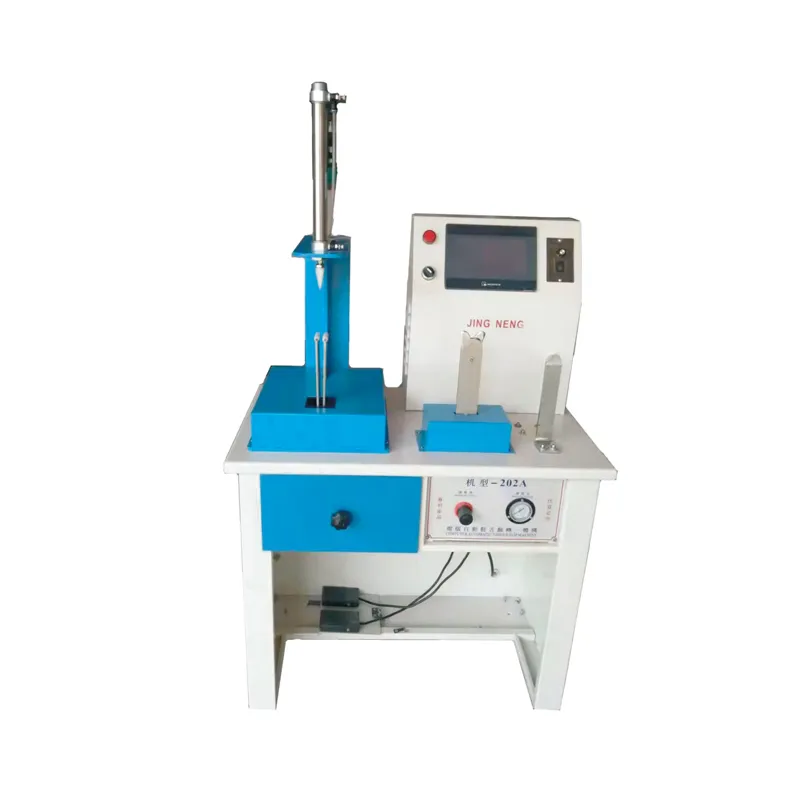
JINGNENG shoe folding machines include solutions for automatic gluing and folding, seam rubbing, shoe tongue turning and straight or special-shaped leather edges.
6. Sewing the Shoe Upper
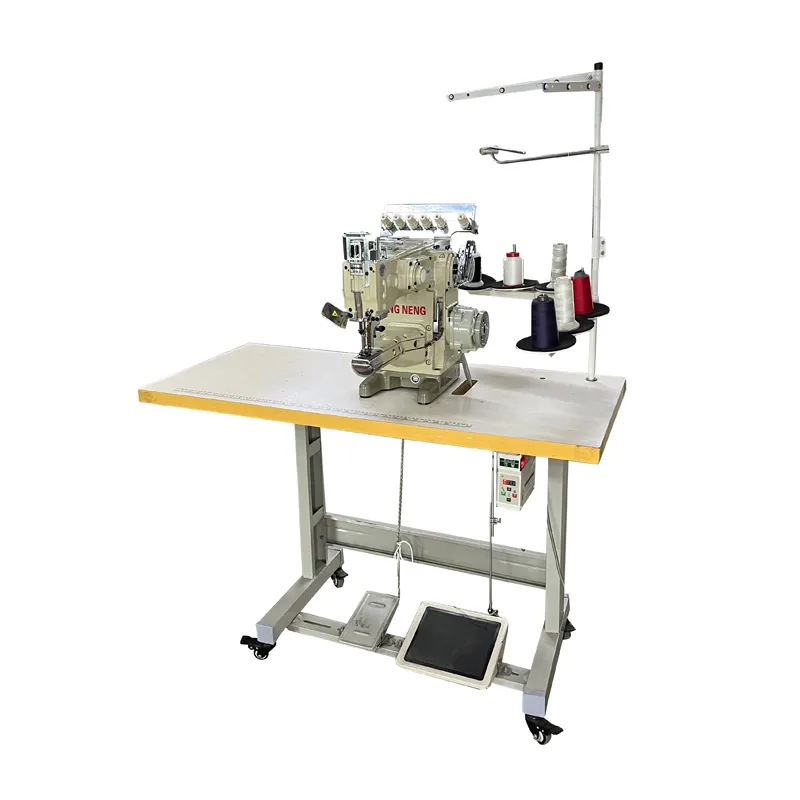
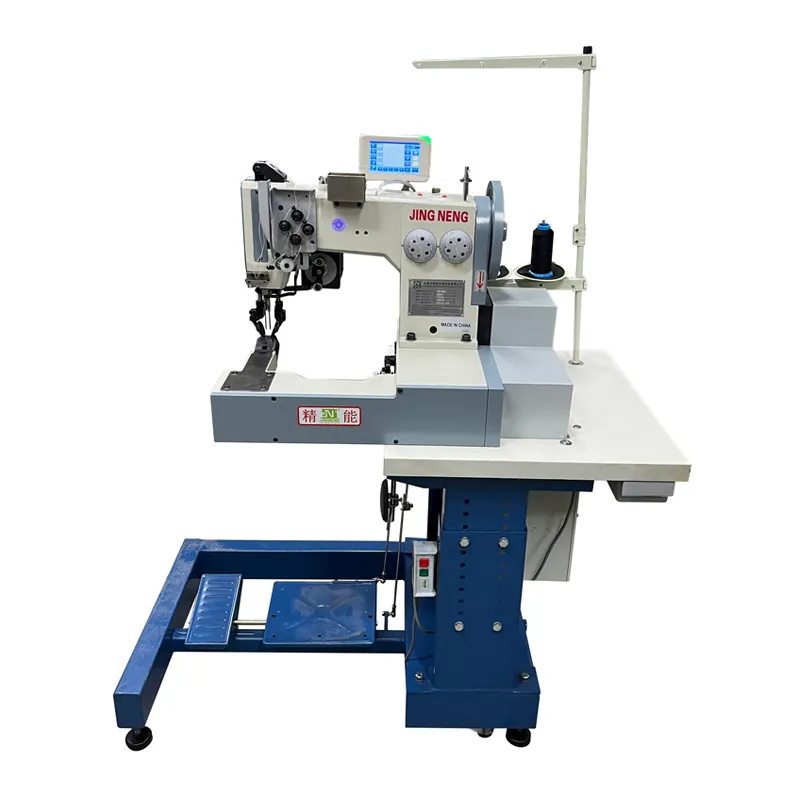
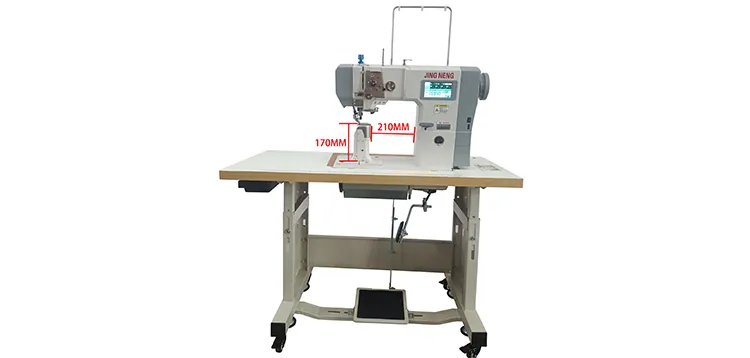
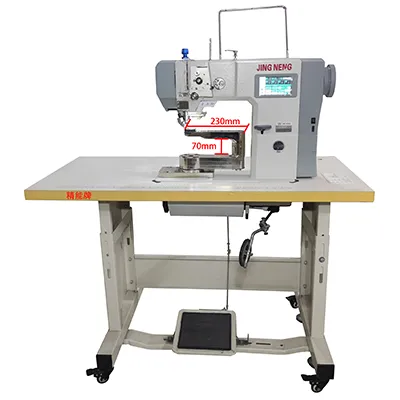
Sewing joins the prepared upper components into a stable assembly and can also create visible decorative stitch lines. The sewing machine should be selected according to component geometry, material thickness, seam type, number of needles and the degree of access required around three-dimensional parts.
| Sewing Requirement | Machine Characteristic to Consider |
| Curved or three-dimensional upper sections | Bed and arm geometry that provides access around the component. |
| Thick or layered materials | Presser-foot lift, feeding method and needle system appropriate for the material stack. |
| Decorative or parallel seams | Needle configuration and stitch-control requirements. |
| Frequent curved-path sewing | Feeding control, visibility and operator access around turns. |
Browse JINGNENG industrial shoe sewing machines for post-bed, Strobel, zigzag, pattern-sewing, sole-stitching and specialized footwear applications.
7. Punching and Eyeleting for Lace-Up Shoe Uppers
Lace-up footwear normally requires accurately positioned holes in the upper. Depending on the product design, the process may stop after punching or continue with automatic eyelet feeding and installation.
The important variables include hole quantity, hole spacing, eyelet type, upper thickness and daily production volume. For high-repeat styles, multi-position or combined punching-and-eyeleting equipment can reduce separate handling operations.
Related category: Shoe Punching & Eyeleting Machines
For a detailed process comparison, see Shoe Punching Machine vs Eyelet Machine.
8. Moulding and Shaping the Prepared Upper
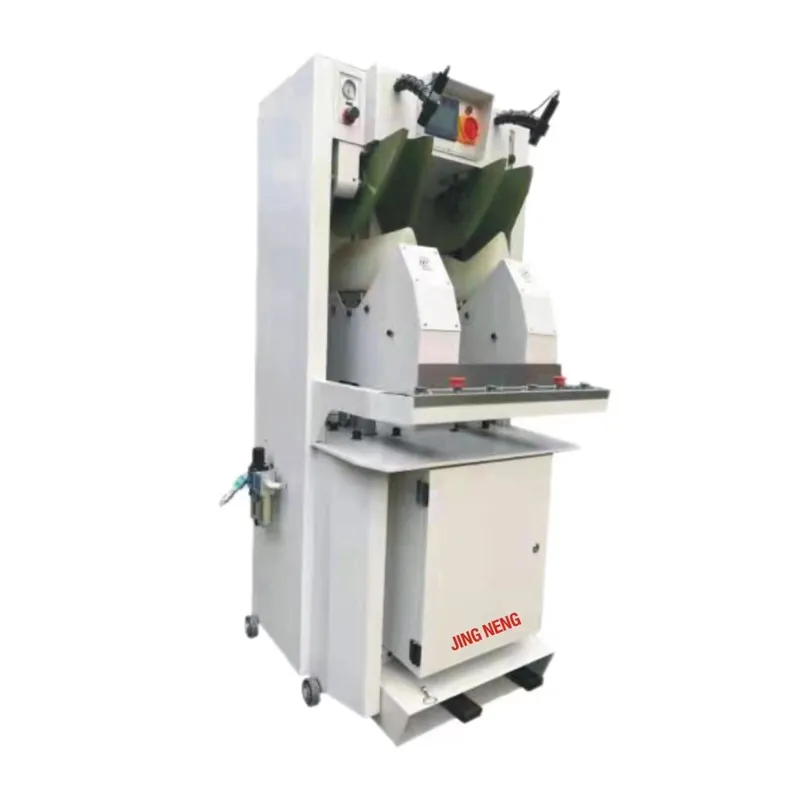
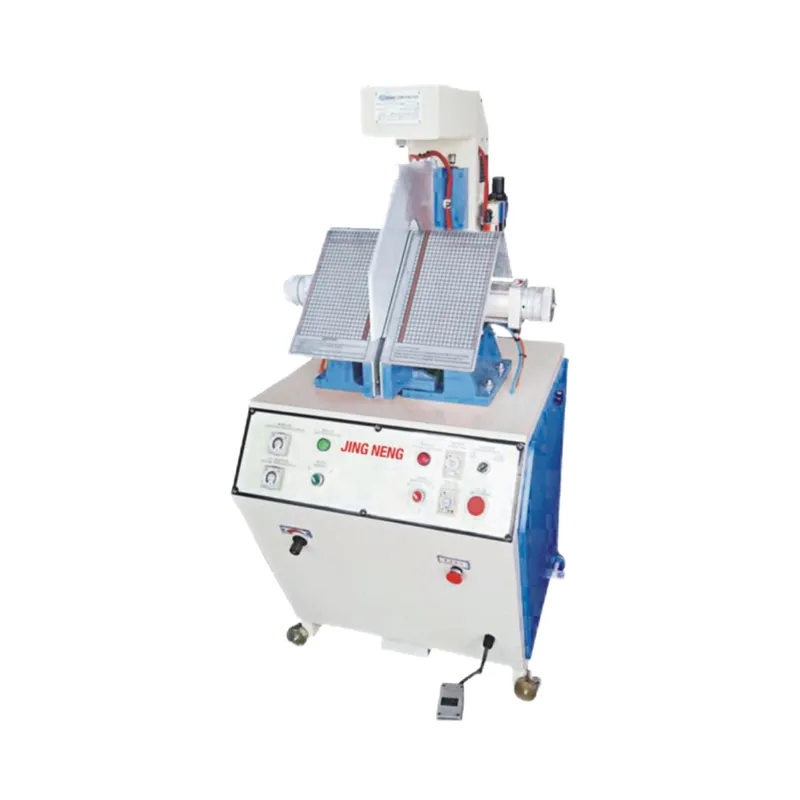
After selected upper components have been prepared and assembled, moulding can be used to introduce or stabilize the required three-dimensional form. Different systems may focus on the vamp, heel counter, complete upper or boot upper.
Heating and cooling perform different roles during shaping, so the machine configuration should match the component, material behavior and factory sequence rather than simply using the highest number of stations available.
Compare JINGNENG shoe moulding machines for counter shaping, vamp forming, shoe-upper moulding and three-dimensional boot-upper applications.
Why One Poor Process Can Affect the Next Three
Shoe upper manufacturing is a chain of dependent operations. Cutting determines component dimensions; skiving influences folding and seam bulk; gluing affects edge stability; folding changes the final edge geometry; and sewing locks multiple components together.
When a defect appears at sewing or moulding, the root cause may therefore be an earlier process. A stable production line needs both suitable equipment and clear process specifications between workstations.
Does Every Type of Shoe Use the Same Upper Manufacturing Process?
No. The exact route changes with the material and shoe construction. A leather dress shoe, sports shoe, boot and sandal can require different combinations of edge preparation, stitching and shaping.
| Footwear Type | Upper-Production Considerations |
| Leather Shoes | Edge thickness, skiving, controlled folding and visible seam quality can be particularly important. |
| Sports Shoes | Multiple textile, synthetic and reinforcement components can increase the number of cutting, gluing and sewing operations. |
| Boots | Larger upper sections and three-dimensional shaft or upper shaping may require different handling and moulding equipment. |
| Sandals / Open Footwear | Straps and smaller leather components may place more emphasis on cutting accuracy, edge finishing and specialized stitching. |
How to Find a Bottleneck in a Shoe Upper Production Line
Buying a faster machine does not automatically increase complete-line output. Production capacity is limited by the slowest repeated operation and by the amount of work-in-progress waiting between processes.
Measure completed components, not only machine speed. Record usable pairs per hour after rejects and rework.
Check queues between operations. A growing pile before one workstation often indicates that its capacity is lower than the upstream process.
Include changeover time. Style changes, glue changes, mould changes and machine adjustments can materially reduce real shift output.
Trace defects backward. An uneven folded edge may begin with inconsistent skiving, while poor sewing alignment may originate from cutting accuracy.
What Information Should a Factory Prepare Before Selecting Shoe Upper Machines?
A machinery supplier can make a more useful recommendation when the factory provides actual production information rather than asking only for a machine price.
| Information to Provide | Why It Matters |
| Shoe styles and construction | Determines which upper processes are required. |
| Material samples and thickness | Helps evaluate cutting, skiving, feeding, gluing and sewing requirements. |
| Component dimensions | Confirms machine working area, mould size and handling requirements. |
| Target pairs per shift | Allows machines to be sized according to complete-line capacity. |
| Existing production sequence | Helps identify whether a new machine replaces, combines or adds an operation. |
| Quality problems to solve | Connects machine selection to measurable production problems instead of automation alone. |
Shoe Upper Manufacturing Process FAQs
What are the main steps in shoe upper manufacturing?
Common processes include material cutting, skiving, adhesive application, edge folding, sewing, punching or eyeleting, and moulding. The exact sequence varies according to the shoe construction and material.
Why is skiving done before shoe upper folding?
Skiving reduces excessive thickness along selected material edges. This can create a less bulky folded edge and make later folding or stitching easier to control.
Is gluing always required before folding?
No. The requirement depends on the material, edge construction and folding method. Some processes apply adhesive separately, while certain automatic folding machines integrate gluing into the same operation.
Which sewing machine is used for shoe uppers?
The correct machine depends on the seam and component geometry. Shoe factories may use post-bed, cylinder-bed, zigzag, pattern-sewing or other specialized machines for different upper operations.
When are eyelets installed in shoe production?
Eyelets are normally installed after the required holes have been positioned and punched in lace-up upper components. Depending on the production setup, punching and eyelet installation can be separate or integrated operations.
How should a shoe factory choose machines for an upper production line?
Start with the footwear construction, materials, component sizes, required operations and target output per shift. Then match each process to suitable equipment while checking whether the capacities of adjacent workstations are balanced.
Build the Shoe Upper Line Around the Process, Not Individual Machines
A stable shoe upper production line depends on how well each process prepares the component for the next one. Cutting accuracy affects alignment, skiving affects edge thickness, gluing and folding affect edge consistency, sewing joins the upper structure, and moulding helps establish the required three-dimensional form.
Instead of selecting equipment according to headline speed alone, footwear manufacturers should evaluate materials, component geometry, process sequence, quality targets and complete-line capacity. This makes it easier to identify where automation creates real production value and where process preparation needs to be improved first.
Planning a Shoe Upper Production Line?
Send JINGNENG your shoe type, upper materials, component dimensions, required processes and target production capacity. We can help you compare cutting, skiving, gluing, folding, sewing, punching and moulding equipment according to your actual footwear-production workflow.
 English