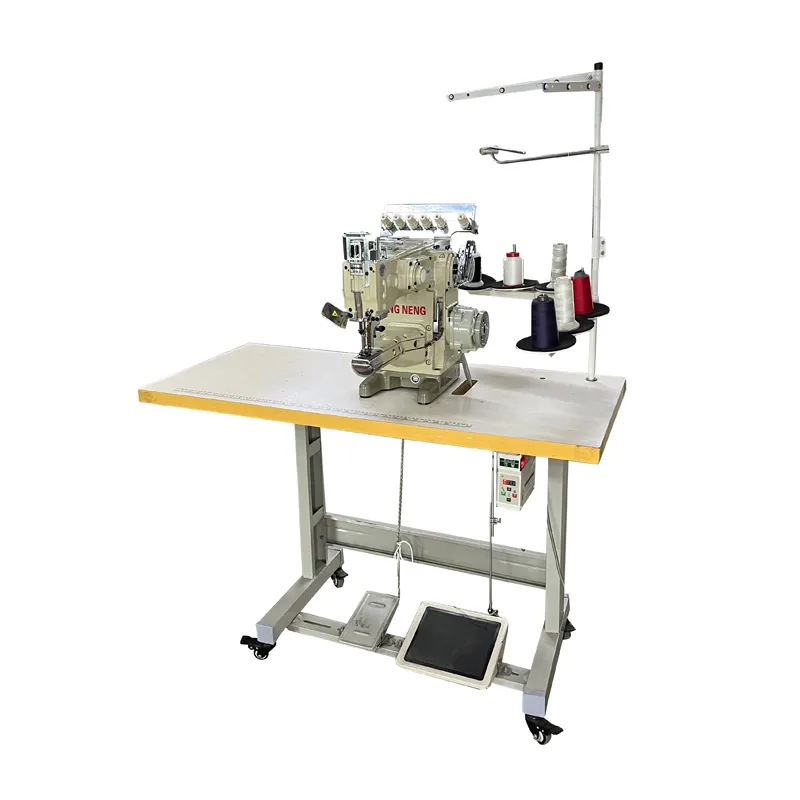
Sidewall stitching and outsole stitching both use thread to connect parts of a shoe around the sole area, but the terms do not describe exactly the same thing. Sidewall stitching refers more specifically to a stitch path running around the side of the shoe where the upper meets a raised or wrapped sole wall. Outsole stitching is a broader term and can describe several constructions in which the outsole is mechanically stitched to other shoe components.
For a footwear factory, this distinction matters because machine selection is controlled by the actual stitch path, shoe opening, sole geometry, needle quantity and access around the shoe—not simply by whether the machine is called a “sole stitching machine.”
Quick Comparison: Sidewall Stitching vs Outsole Stitching
| Factor | Sidewall Stitching | Outsole Stitching |
| Stitch Position | Around the side perimeter of the shoe | Through or around the outsole structure depending on construction |
| Typical Geometry | Raised or wrapped sidewall around the shoe perimeter | Depends on outsole, welt, insole and upper construction |
| Common Footwear | Casual shoes, sneakers and flexible footwear | Varies from casual shoes to stitched leather footwear |
| Machine Selection | Focus on side access, horn angle, shoe size and perimeter control | Depends strongly on the exact sole construction and stitch path |
Important: “Outsole Stitching” Is a Broad Term Not every outsole-stitched shoe uses the same construction or the same machine. Before selecting equipment, define exactly which layers the needle must pass through and where the seam appears on the finished shoe. Sidewall stitching is therefore better understood as one specific stitching geometry within the wider field of sole attachment.
What Is Sidewall Stitching?
In a sidewall-stitched shoe, the visible stitching normally travels around the outer perimeter where the upper meets the side of the sole structure. Instead of working mainly from underneath the shoe, the operator guides the seam around the side profile.
This creates a particular machine-access problem: the complete shoe must rotate continuously around the sewing head while the needle remains aligned with the required stitch line. A compact swing arm, suitable horn shape and consistent compound feed can therefore be more important than headline sewing speed alone.
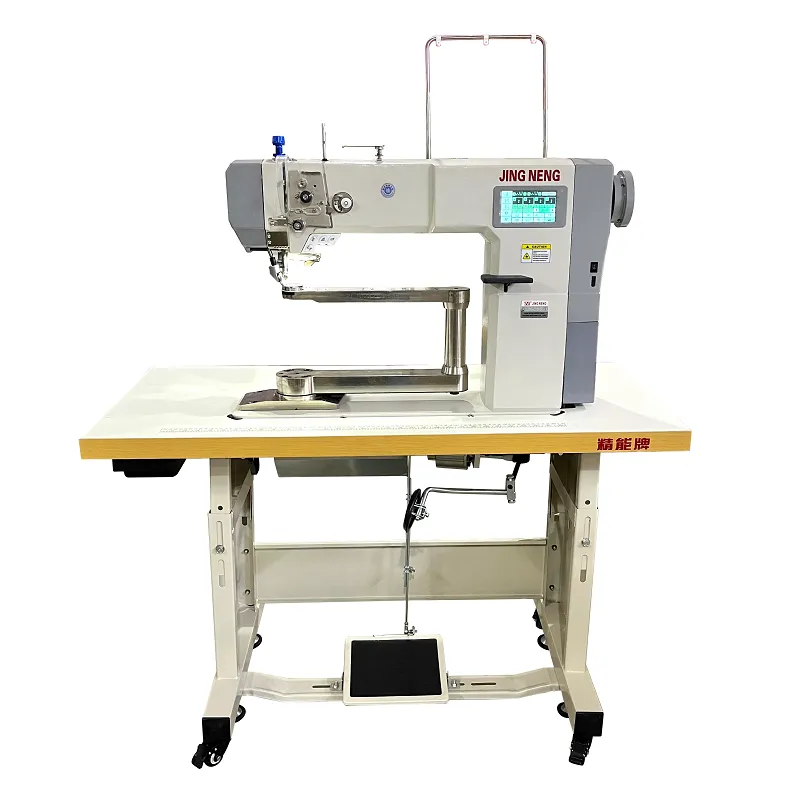
JN-168: Standard Sidewall Stitching Configuration
The JN-168 Single Needle Shoe Sole Stitching Machine uses a swing-arm structure and compound feeding for sidewall stitching. Its listed specifications include a maximum speed of 1500 stitches per minute, 0–15 mm stitch length and 14 mm presser-foot lift.
The Stitch Path Determines the Machine Geometry
A simple way to understand sole-stitching machine selection is to imagine where the operator needs to move the shoe during one complete stitch cycle around the perimeter.
Sidewall Path The shoe rotates around the machine while stitching follows the visible side perimeter. Access around the toe and heel curves is especially important.
Other Outsole Stitch Paths The seam may pass through different outsole, welt, insole or upper layers depending on the footwear construction. These processes can require very different machine heads, needles and feeding arrangements.
Do Sidewall, Blake and Welted Shoes Use the Same Stitching Method?
No. These constructions place stitching in different locations and connect different layers. The terminology is important because two machines described broadly as “outsole stitching machines” may perform completely different operations.
| Construction | Simplified Stitch Relationship | Machine-Selection Implication |
| Sidewall Stitched | Stitch runs around the side perimeter between upper and sole wall | Side access and shoe rotation are key |
| Blake / McKay-Type | Stitch passes through the sole structure toward the inside of the shoe | Requires machine access suited to internal sole stitching |
| Welted Outsole Stitch | Outsole is stitched to a welt rather than directly using a sidewall seam | Requires dedicated welt / outsole stitching equipment |
This is why factories should provide a shoe sample, cross-section or clear stitch-path photo before asking a machinery supplier for an “outsole stitching machine.”
Single Needle vs Double Needle Side Sole Stitching
Needle quantity changes both the appearance of the seam and the machine configuration. A double-needle machine should not automatically be considered an upgrade from a single-needle model; it is useful only when the shoe design actually requires two parallel stitch lines.
| Factor | Single Needle | Double Needle |
| Stitch Appearance | One seam line | Two parallel seam lines |
| Typical Selection Reason | Standard sidewall stitching requirement | Design requires paired stitching or a stronger visual seam |
| Machine Example | JN-168 | JN-168Z |
Why Do Sole Stitching Machines Use Different Horn and Arm Shapes?
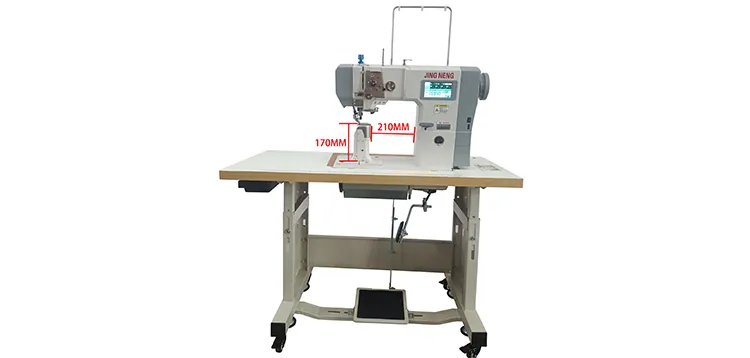
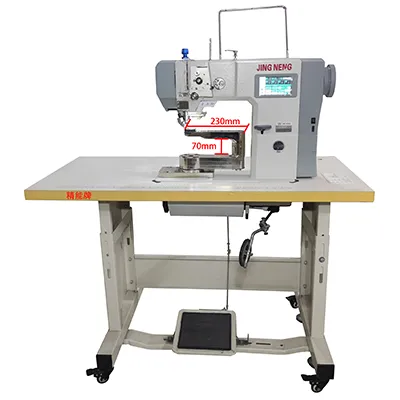
Even within the same sidewall-stitching category, shoe geometry changes how easily the operator can guide the stitch around the toe, heel and opening. JINGNENG therefore offers several machine-head configurations rather than one universal design.
Standard Swing Arm — JN-168
A general single-needle configuration for sidewall sewing on sports shoes, casual footwear and other special stitching applications.
15° Tilted Horn — JN-168H
The JN-168H 15° Tilt Shoe Sole Stitching Machine uses an upward-tilted horn geometry. This changes how the shoe sits against the sewing point and can improve access for certain sole and upper profiles.
180° U-Shaped Feed — JN-168H
The JN-168H 180° U-Shaped Feed Machine uses a different working geometry for footwear, leather goods, bags and special structural sewing where additional rotation and access are required.
JINGNENG Side Sole Stitching Machine Selection
The following models illustrate how machine selection changes according to needle configuration and workpiece geometry.
| Model | Configuration | Main Difference | Key Specification |
| JN-168 | Single needle / swing arm | General sidewall stitching | 1500 spm / 0–15 mm stitch / 14 mm lift |
| JN-168H 15° | Single needle / tilted horn | Different shoe-positioning angle | 1500 spm / 0–15 mm stitch / 14 mm lift |
| JN-168H 180° | U-shaped feed / swing arm | Access for complex products and special sewing | Adjustable-speed electronic positioning motor |
| JN-168Z | Double needle / swing arm | Two parallel sidewall stitch lines | 1500 spm / 0–15 mm stitch / 14 mm lift |
Browse the complete JINGNENG shoe sole stitching machine range for additional small-mouth, cylinder-bed and sidewall models.
6 Machine Specifications That Matter in Sole Stitching
1. Stitch Length — Longer stitch adjustment gives more flexibility across different sole designs and decorative requirements.
2. Presser-Foot Lift — Must provide enough clearance for the complete sole and upper thickness at the sewing position.
3. Feed System — Compound feeding helps multiple shoe layers move together and supports more uniform stitch spacing.
4. Horn and Arm Geometry — Determines whether the operator can comfortably guide the toe, heel and side profile around the needle.
5. Needle Quantity — Select one or two needles according to the required seam design rather than assuming more needles are automatically better.
6. Speed Control — Fine speed control is particularly useful around tight curves where the operator needs more time to guide the shoe accurately.
Common Side Sole Stitching Problems and What to Check
| Problem | What to Check |
| Stitch line moves up and down around the shoe | Check shoe guidance, seam reference, horn position, feed consistency and operator speed around curves. |
| Uneven stitch length | Check feed pressure, component thickness changes and whether the upper and sole move together consistently. |
| Difficulty turning around the toe | Reduce sewing speed and confirm whether the horn, swing arm or small-mouth configuration matches the shoe size and toe geometry. |
| Thread jamming | Check thread path, needle, tension and material resistance. JINGNENG JN-168-series machines also use a stop-protection structure intended to stop operation if the sewing thread jams. |
| Needle cannot clear thick sole structure | Confirm presser-foot clearance, needle system, actual material stack and whether the machine is designed for that specific construction. |
Send These Details Before Choosing a Shoe Sole Stitching Machine
A machine supplier can recommend the correct configuration much more accurately when the stitch path and shoe geometry are clearly defined.
1. Send a photo of the complete shoe and sole.
2. Mark exactly where the stitch line should run.
3. Provide the smallest and largest shoe sizes.
4. Provide sole and upper material thickness.
5. Confirm whether one or two stitch lines are required.
6. Provide target pairs per shift and current stitching problems.
Sole Stitching Is Only One Part of the Footwear Sewing Process
Side sole stitching should not be confused with shoe-upper sewing. Upper components are generally assembled earlier using equipment such as post-bed, cylinder-bed, pattern or other specialized shoe sewing machines.
Sole stitching occurs later and deals with the relationship between the assembled upper and sole structure. Keeping these two topics separate helps factories select equipment according to the actual operation rather than using “shoe sewing machine” as one broad machine category.
Sidewall and Outsole Stitching FAQs
Is sidewall stitching the same as outsole stitching?
Not exactly. Sidewall stitching refers to a particular seam position around the side of the shoe. Outsole stitching is a broader description that can include several different sole constructions and stitch paths.
What shoes commonly use sidewall stitching?
Sidewall stitching is commonly associated with flexible casual, leisure and sneaker-style constructions where the visible stitch travels around the outer side perimeter of the shoe.
Should I choose a single-needle or double-needle sole stitching machine?
Choose according to the required seam design. A single-needle model produces one stitch line, while a double-needle machine is intended for footwear requiring two parallel seam lines.
Why does horn angle matter on a side sole stitching machine?
Horn angle changes how the shoe sits relative to the needle and can improve access around certain sole profiles. The best geometry depends on shoe size, sidewall shape and stitch position.
Is the fastest shoe sole stitching machine always the best choice?
No. Around tight toe and heel curves, controllability and workpiece access can be more important than maximum rated speed. Real production output also depends on handling time, operator skill and shoe geometry.
What should I send a supplier before buying a side sole stitching machine?
Provide the finished shoe, stitch-path photos, smallest and largest sizes, sole thickness, material details, required stitch spacing and target production volume. A physical sample is even better when the construction is unusual.
Choose the Stitch Path First, Then Choose the Machine
The main difference between sidewall stitching and other outsole-stitching processes is not simply the thread or needle. It is where the stitch travels through the shoe and how the finished footwear must be positioned around the sewing point.
Once the stitch path is clear, manufacturers can compare single or double needles, horn geometry, swing-arm structure, presser-foot clearance, feed system and speed control. This makes machine selection much more reliable than purchasing only according to a generic “shoe sole stitching machine” name.
Need to Match a Sole Stitching Machine to Your Shoe?
Send JINGNENG photos or samples of the shoe, mark the required stitch path, and provide the sole thickness, shoe-size range, needle requirement and target production volume. We can then compare sidewall, small-mouth, tilted-horn, U-shaped and other sole-stitching configurations for your actual footwear construction.
 English